
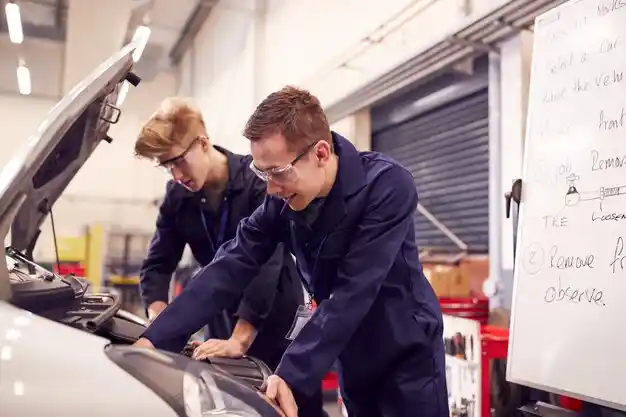

Starting a career as a certified mechanic in Australia offers long-term job security, practical skills, and access to a growing industry. But becoming a licensed, job-ready mechanic isn’t just about picking up a wrench — it involves formal training, apprenticeships, and compliance with national standards.
This guide walks you through each step of the certification process, explains key requirements, and outlines the qualifications employers expect from entry-level and experienced mechanics across Australia.
What Does It Mean to Be a Certified Mechanic?
A certified mechanic is someone who has completed formal training and holds a nationally recognised qualification. In most cases, this means completing a Certificate III in Light Vehicle Mechanical Technology through an apprenticeship or training provider.
Certification proves you’re competent in core mechanical skills, safety standards, and diagnostic practices. It also increases your employability and earning potential in both independent workshops and dealership service departments.
Step-by-Step: How to Get Certified in Australia
Step 1: Complete Year 10 or Equivalent
Most apprenticeships and training providers require applicants to have completed Year 10. Some providers also ask for basic literacy and numeracy skills, which may be tested before enrolment.
Step 2: Start an Automotive Apprenticeship
An apprenticeship allows you to work full-time in a workshop while studying part-time at a Registered Training Organisation (RTO) or TAFE.
Key facts about apprenticeships:
- Usually takes 3 to 4 years to complete
- You earn a wage while learning
- Your employer supports your hands-on training
- You study for a Certificate III qualification alongside your job
Apprenticeships are available in light vehicle mechanics, heavy vehicle servicing, mobile plant tech, auto electrical, and diesel technology.
Step 3: Enrol in a Certificate III Program
The standard qualification to become a mechanic is:
Certificate III in Light Vehicle Mechanical Technology (AUR30620)
This course covers:
- Engine repair and rebuilding
- Transmission systems
- Steering and suspension
- Braking systems
- Diagnostics and scan tool use
- Workplace safety and environmental regulations
It includes both theoretical study and practical workshop-based assessments.
Most apprentices are enrolled in this certificate through their employer, but it’s also available to non-apprentices under specific funding schemes or self-funded options.
Step 4: Complete Training and Log Requirements
Throughout your apprenticeship, you’ll complete training modules and log your work experience. Your progress will be monitored by your RTO and employer.
You must demonstrate competence in all required areas, including safety procedures, customer communication, and technical repair work.
Your trainer will conduct regular workplace assessments and sign off once you meet each learning outcome.
Step 5: Receive Certification
After completing all assessments and on-the-job hours, your RTO will issue your nationally recognised certificate.
You are now officially a qualified mechanic — capable of working unsupervised in workshops across Australia.
You can also pursue further study or licensing depending on your goals.
Optional Add-Ons: Licensing and Specialisations
While a Certificate III is enough to work in most mechanical jobs, some roles require additional training or licences.
ARCtick Licence
To handle air conditioning systems, you need an ARCtick Refrigerant Handling Licence issued by the Australian Refrigeration Council.
This involves:
- Completing an accredited air con servicing course
- Applying for a licence via arctick.org
- Renewing every 1–2 years depending on your category
Automotive Electrical or EV Specialisation
If you want to move into diagnostics, electric vehicles, or auto electrical work, consider:
- Certificate III in Automotive Electrical Technology
- EV Safety or Hybrid System Training courses
- Advanced diagnostic modules
These areas are high growth and can lead to senior roles in dealerships and high-end service centres.
Pathways After Certification
Once qualified, you can:
- Work as a light vehicle mechanic in a local workshop
- Join a dealership service team
- Become a mobile mechanic
- Specialise in diesel, heavy vehicles, or diagnostics
- Start your own repair business
- Continue into Certificate IV for supervisory or diagnostic roles
The demand for qualified mechanics remains strong across urban and regional Australia, especially for those with good customer skills and electronic know-how.
Funding Options and Support
In Australia, there are multiple funding schemes available:
- Australian Apprenticeship Support Network (AASN) – Offers employer and apprentice support
- Trade Support Loans – For eligible apprentices
- Fee-Free TAFE – Available in some states for high-demand trades
- Skills Checkpoint – For older workers changing careers
Contact your local TAFE or job centre to check eligibility.
Key Skills You’ll Learn as a Qualified Mechanic
- Diagnosing engine and electrical faults
- Servicing and inspecting vehicles
- Repairing steering, suspension, brakes, and cooling systems
- Using scan tools and technical manuals
- Following OH&S and environmental guidelines
- Communicating clearly with customers
These skills form the foundation for a long-term, practical, and adaptable career.
Tips for Starting Your Automotive Career
- Choose a workshop that invests in training and mentorship
- Treat your apprenticeship like a long job interview
- Keep your logbook and records up to date
- Ask questions and learn from experienced techs
- Look for areas to specialise in (diesel, air con, diagnostics)
- Continue learning even after certification
Investing early in your development pays off long term, especially as vehicles continue to evolve.
Final Thoughts
Becoming a certified mechanic in Australia is a straightforward path for anyone with a strong work ethic and interest in vehicles. Through a mix of on-the-job training and formal study, you’ll build the skills needed to thrive in an essential trade.
With the right qualification, you can unlock job security, great pay, and career growth in one of Australia’s most reliable industries.
Whether you’re a school leaver or switching careers, the road to becoming a certified mechanic starts with the decision to learn and grow.